Mindset Matters
The goal of this project was to develop a growth mindset training program for NYU graduate students to help them embrace challenges and thrive in their academic and professional journeys.

After studying the impact of traditional grading systems on student mindsets, I found that many graduate students carry fixed mindsets from their previous educational experiences, often believing their abilities are static rather than developable. I discovered through research, including work by Brandon Joel Tan and Carol Dweck, that this fixed mindset can lead students to avoid educational risks and focus on grades rather than genuine learning. I independently developed this growth mindset training program for NYU graduate students, aiming to help them embrace challenges and focus on development during their studies, ultimately better preparing them for both academic and professional success.

Target Audience
NYU Graduate Students
Tools
Articulate 360, Figma, Google Drive
Learning Goal 1
Learners will understand the benefits of having a growth mindset as a student and a professional.
Objective 1: Learners will define the key characteristics of a growth mindset, such as embracing challenge, persisting in the face of setbacks, valuing effort, and seeking input from others.
Objective 2: Learners will differentiate between fixed mindset beliefs and growth mindset beliefs in educational and professional settings.
Objective 3: Learners will evaluate the correlation between mindset and academic or professional success, identifying how a growth mindset contributes to resilience and achievement.
Learning Goal 2
Learners will develop strategies to begin cultivating a growth mindset.
Objective 1: Learners will engage in reflective exercises to identify their own fixed mindset tendencies and areas for growth.
Objective 2: Learners will explore various strategies for cultivating a growth mindset, such as setting learning goals, seeking constructive feedback, and embracing failures as learning opportunities.
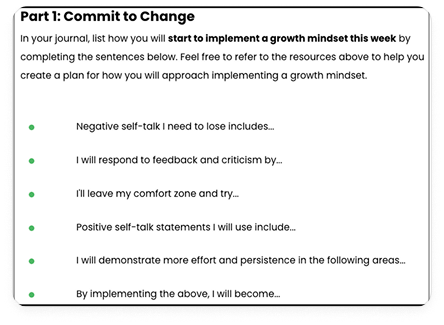
Objective 3: Learners will create an action plan strategy that they will use to adopt and reinforce a growth mindset in the week following the completion of the core lessons.

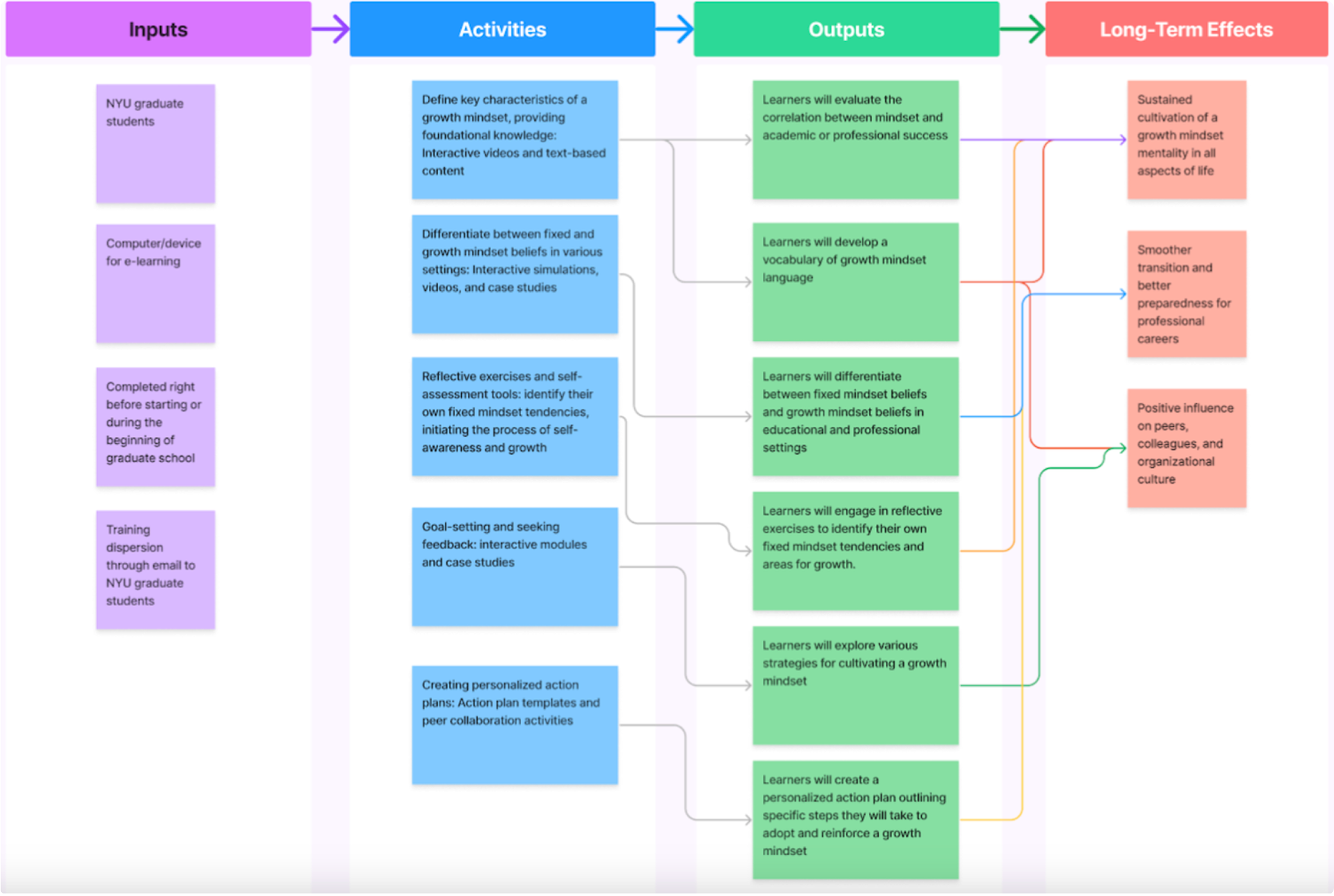
Logic Model
The following Logic Model details the scope of this project from Inputs to Long-Term Effects. The purpose of this model is to detail the connections and changes between essential elements of this learning design proposal.
Learning Content and Design
Interactive Content
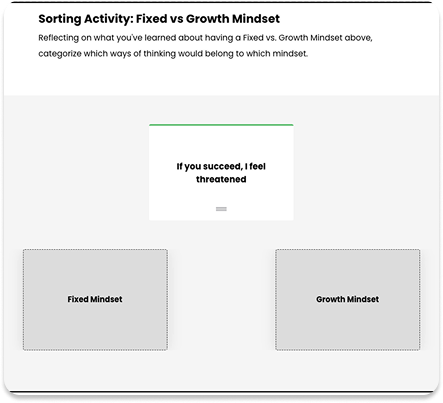
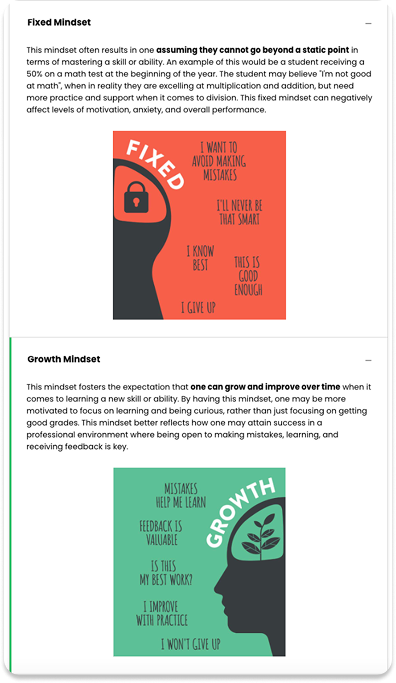
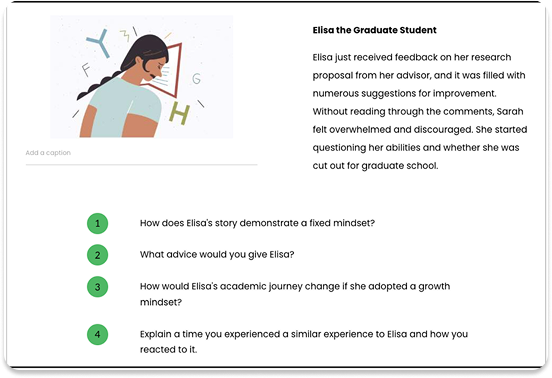
Students are provided with side-by-side comparisons of fixed mindset beliefs and growth mindset beliefs through visual aids, videos, and formative assessment activities. They then test their understanding by being presented with scenarios and different mindsets and share which are representative of fixed and growth mindsets.
Knowledge Check: Sorting Activity
Accordion Information about Both Mindsets
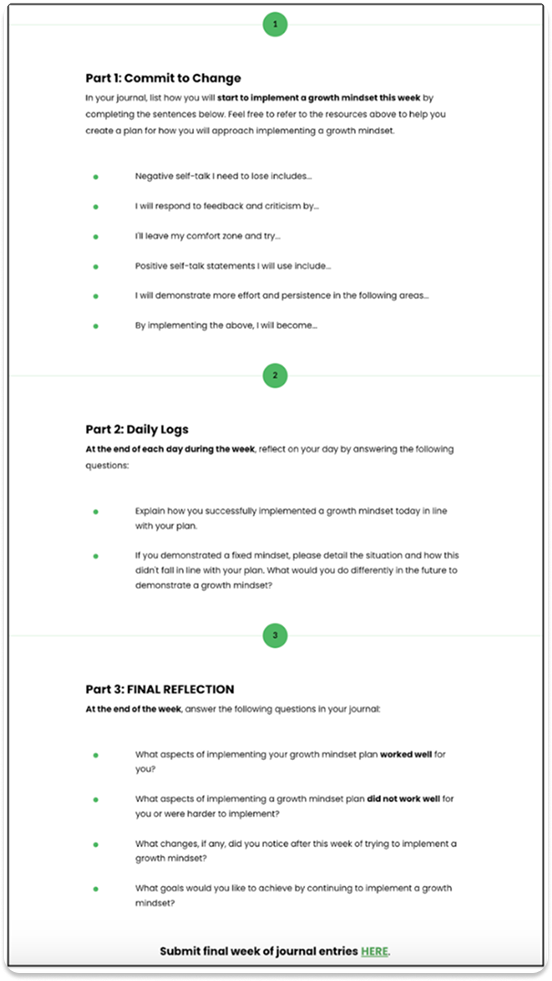
Reflective Journaling
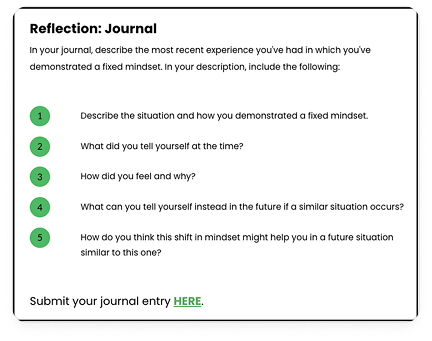
There will be frequent opportunities throughout the course to reflect on one's own experiences around implementing fixed and growth mindsets and its impact on their academic or professional journey.

Assessments
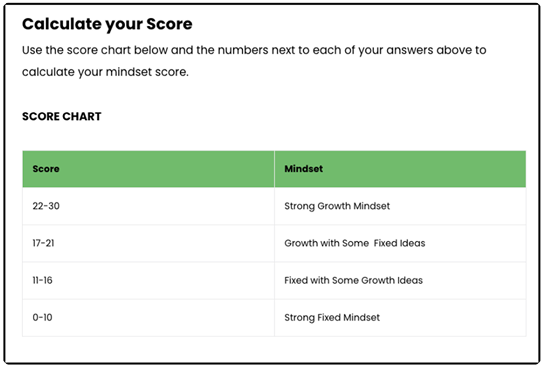
Pre-Course Self Assessment
Before beginning the first lesson, learners take a short survey by sharing whether they strongly agree, agree, disagree, or strongly disagree with 10 statements. They will then add up the number next to each of their answers to calculate their mindset score. This will give learners an idea of their starting point when entering this course, as well as build buy-in in learning more about themselves in the following lessons.
Reflective Prompts
These assessments are built upon from the journaling activities, but focus on guided reflection prompts that encourage learners to examine their own thoughts and behaviors related to fixed and growth mindsets that may not have come to mind in the journaling activities.
Scenario-Based Learning Formative Assessments
These scenario activities will allow learners to apply growth mindset language to reframe challenges and setbacks, promoting practical application and skill development (Dirksen, 2016), as well as fostering opportunities for self-reflection.
Growth Mindset Strategy Summative Assessment
Learners can able reference support strategies and examples of growth and fixed mindsets when laying out their growth mindset strategy in their journal for the following week. This final summative assessment will be designed as a diary study in which learners will journal at the end of each day reflecting on their implementation of their growth mindset strategy and where they can improve. At the end of the week, they will write a final reflection and submit their journal entries.